Better Inquiries
Should I Put Prices on My Website? A Guide for Service Businesses

You should put prices on your website when you can explain them accurately and keep them current. That does not mean every service needs a fixed number. A defined package may support a clear price, while a complex renovation may need a scope discussion and site visit.
The goal is to help a customer understand whether your service is a fit and what happens next. Choose the pricing format that matches the way you actually quote work.
Use a fixed price for a clearly defined service
A fixed price is most useful when the deliverable and its limits are clear. State what is included, what is excluded, and any conditions that affect the price.
A customer should not have to discover a required charge halfway through booking. If travel, materials, equipment, or additional work can change the amount, explain that beside the offer.
Think about the questions your office usually answers after someone sees the price. If nearly every caller needs a long correction, the offer may be too loosely defined for one fixed number.
Use a starting price only when the starting scope is real
“From” pricing can help introduce a service with a genuine entry scope. It becomes unhelpful when almost nobody can purchase the advertised version or the conditions are buried elsewhere.
Explain what the starting scope includes and what commonly changes it. For a custom service, this might be size, access, material choice, preparation, or additional features. Use your own quoting history to decide which factors are relevant.
Do not copy another company’s starting price to fill a space on your website. It needs to represent your business and a scope you are prepared to deliver.
Use ranges when you can explain the variation
A range can help a prospect plan, but it should be grounded in your actual work. Describe the assumptions behind it and make clear when an inspection or detailed scope is needed.
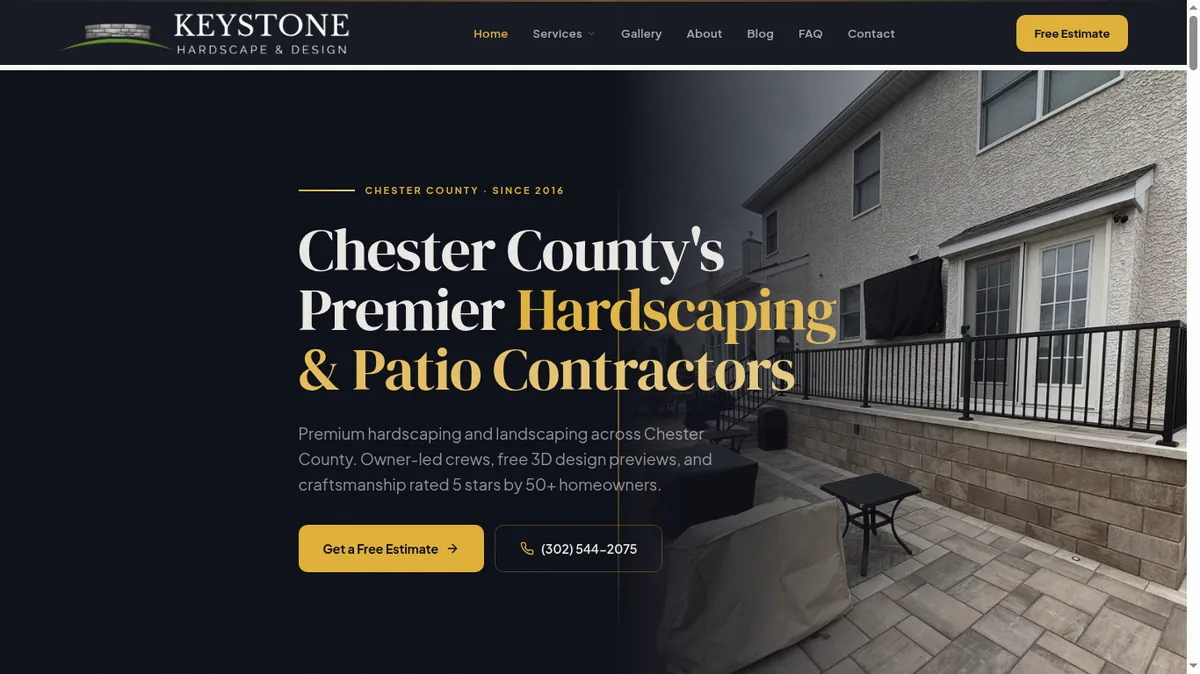
For a hypothetical patio project, the amount might depend on area, material, excavation, access, and drainage work. Explaining those factors is useful even if you do not publish a numerical range. We are describing a pricing format here, not quoting patio installation costs.
Avoid presenting a very wide range without context. If the low and high ends represent completely different jobs, separate the scopes so a visitor can see which is relevant.
If the work needs a custom estimate, explain the process
“Call for pricing” can be appropriate, but it should not be the only useful information on the page. Explain what you need to prepare an estimate, whether a visit is involved, and whether an assessment carries a charge under your actual policy.
For a remodeler, that might mean project location, desired work, approximate timing, and available photos. For a service call, the next step may be scheduling an assessment. Tell the customer what submitting the form does and does not commit them to.
A budget field can help qualify a project when used thoughtfully. Explain why you ask and let people say they are unsure. Do not turn the form into a demand for information they cannot reasonably know yet.
Compare the options before choosing
| Format | Useful when | What to explain |
|---|---|---|
| Fixed price | The scope is repeatable and well defined | Inclusions, limits, and required charges |
| Starting price | A real base service exists | The base scope and common additions |
| Price range | Similar jobs vary within an explainable scope | Assumptions and major cost drivers |
| Custom estimate | Conditions or requirements vary substantially | Assessment steps and information needed |
You can use more than one format across a website. A maintenance package and a custom installation do not have to share the same pricing presentation.
Measure whether the page helps customers self-select
Publishing prices may change the mix of inquiries. Fewer inquiries are not necessarily worse if more are a good fit; more inquiries are not necessarily better if most misunderstand the offer.
Record when the pricing explanation changes, then review the questions people ask, the suitability of the jobs, and the estimates that move forward. Consider seasonality and other marketing changes before attributing the difference to the page alone.
Assign someone to review published prices and conditions whenever the offer changes. An outdated price can create avoidable friction even when the original wording was clear.
For your next step, choose one service and write its scope before deciding on a number. If you need help presenting that offer, talk to Zero Degree Media. For the specific question of website project costs, see our separate contractor website cost guide.