GEO Explained
What Is Generative Engine Optimization? How to Evaluate GEO
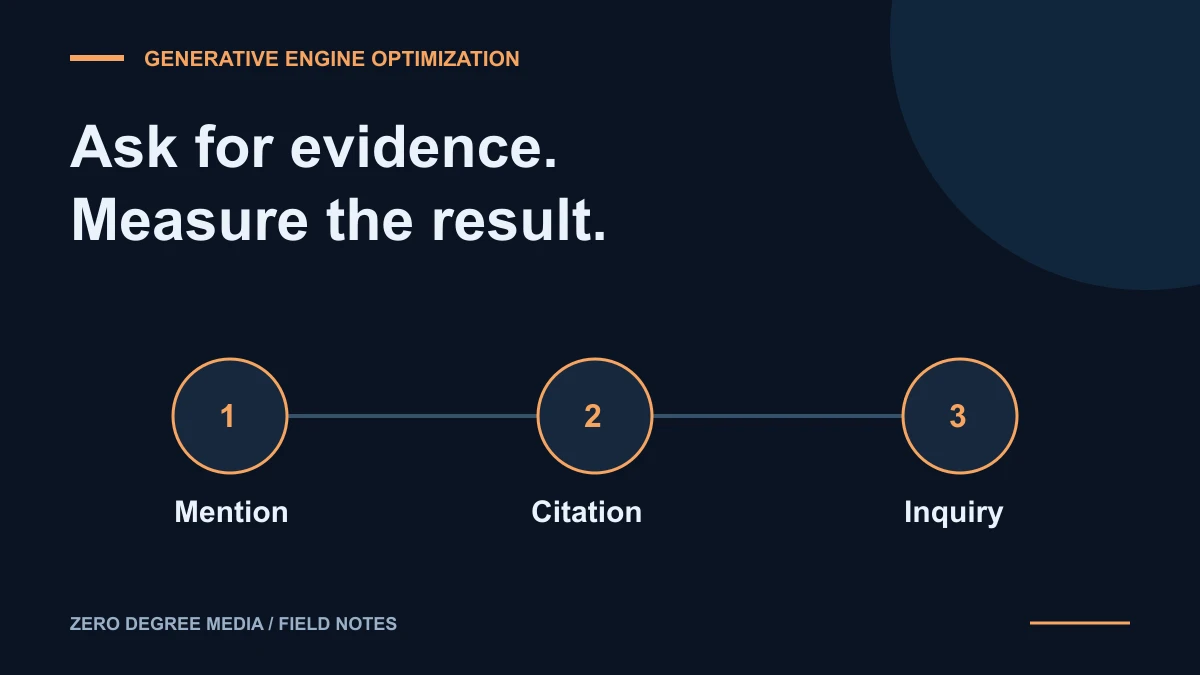
Generative engine optimization, or GEO, is an industry term for work intended to improve how a business or its content appears in generated answers. The term often includes website access, content clarity, business information, and measurement of mentions or citations.
For a business owner, the important question is not whether a proposal uses the newest acronym. It is what work will be done, what evidence supports it, and what the provider can honestly measure.
Understand how GEO differs from related terms
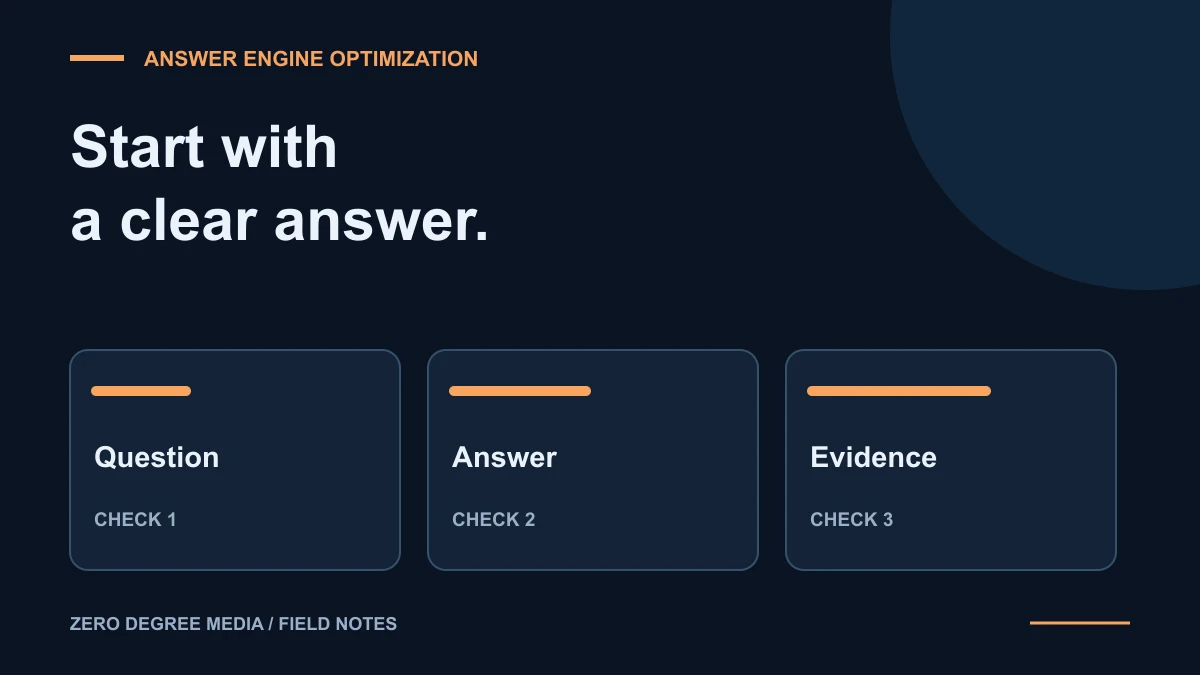
SEO generally concerns visibility and usefulness in search. AEO emphasizes answering questions clearly. GEO emphasizes visibility in generated responses that may draw on multiple sources. The work can overlap substantially.
These are descriptions of an emphasis, not three completely separate websites or guaranteed distribution channels. Our AEO guide focuses on writing useful service-page answers. This article focuses on evaluating a GEO service and its results.
Google’s generative AI optimization guide explains that its AI-search experiences remain connected to its search systems. A provider should be able to connect proposed changes to a concrete problem rather than suggesting ordinary website quality no longer matters.
Ask for a baseline before accepting a result claim
A useful baseline identifies the platform, the questions tested, the date, relevant location context, and the cited pages. It should also record existing website traffic and inquiries where measurement is available.
If an agency says “You are invisible to AI,” ask what it tested. One unanswered prompt is not an audit of every user, product, location, and search mode.
If it later reports an increase, ask whether the same questions and method were used. Changing the prompt set can change the result without any change to your business’s underlying visibility.
Require a list of concrete deliverables
Useful work might include checking access to public service pages, correcting inconsistent business details, improving page structure, documenting real projects, and setting up a repeatable measurement process.
Ask which pages will change and how the writer will verify the facts. A service-area correction requires information from the business. A project story requires actual project evidence. A review claim requires a real source.
Be cautious when a deliverable is mainly a large quantity of articles or mentions with little explanation of their value. You still need to review whether the content helps customers and represents your business accurately.
Separate implementation from outcomes
| Reported item | What it establishes |
|---|---|
| Crawler access fixed | A documented access restriction was addressed |
| Service content improved | Specific information was added or clarified |
| Business mentioned | The name appeared in a recorded answer |
| Page cited | The answer linked to a page in that observation |
| Referral visit | Analytics recorded a visit attributed to that source |
| Qualified inquiry | Someone contacted the business about suitable work |
These observations can form a useful sequence, but one does not automatically establish the next. A citation screenshot is not a sales report. A traffic chart is not proof that a particular content edit caused the change.
Check the limits of the promise
Ask whether the provider guarantees placement, how it handles changing answers, and what happens when results cannot be measured. No agency controls every generated answer a platform serves.
Also ask how the work affects your existing website and business information. You should know which accounts or settings are involved and what remains yours if the service ends. Avoid approving broad changes you do not understand merely because they are labeled GEO.
For a small service business, a focused improvement to a key page can be a more reviewable starting point than an open-ended visibility package. Set a clear scope, preserve a baseline, and review actual inquiries alongside search observations.
Our website audit can help identify content and access issues. The broader AI-search guide explains the fundamentals we can improve without promising a specific recommendation.